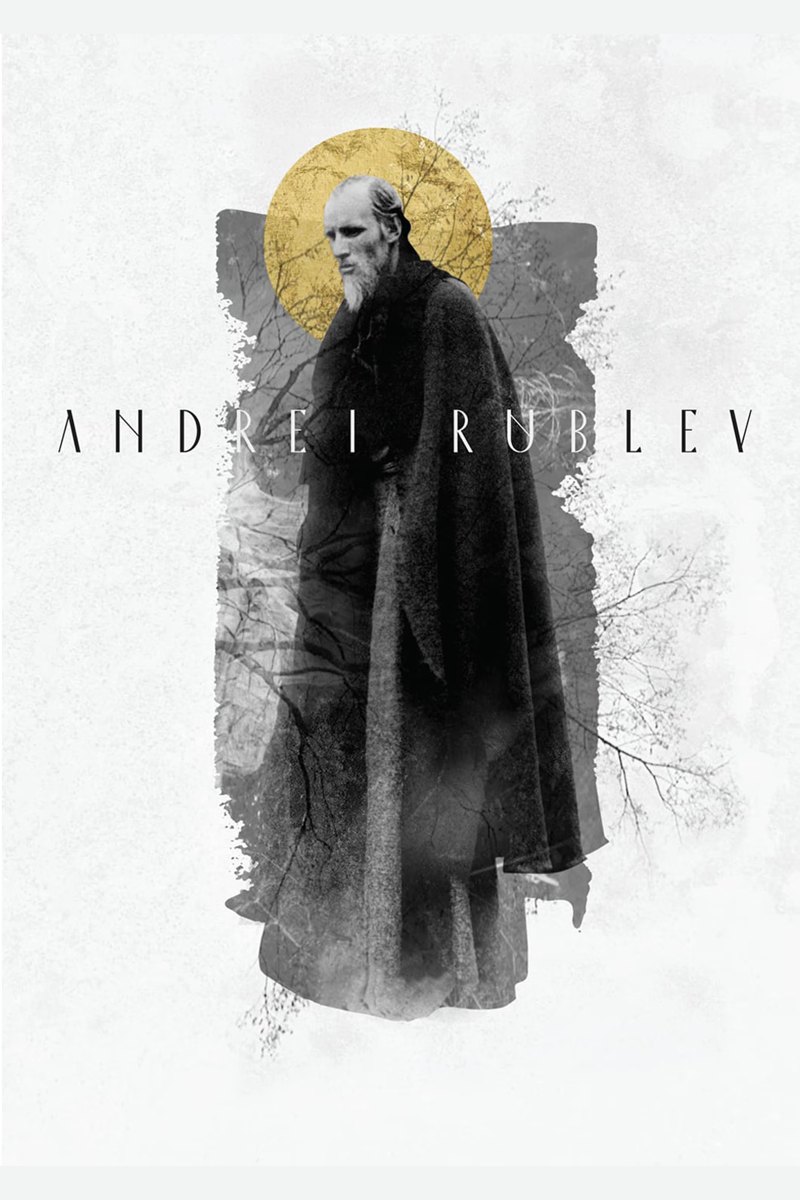
Andrei Rublev (1966) · Andrei Tarkovsky
Solitude in a complete surrender to beauty
Andrei Rublev isn’t so much a biopic as it is a speculative interpretation of the artist’s life, where it feels as if the only source of reference Tarkovsky looked at in his research for the film was the man’s own paintings, the details of which are depicted throughout the course of the film. Very little is actually documented about Andrei Rublev’s life, so this re-imagining of what is known and is only speculative worked in Tarkovsky’s favor.
The two most recurring questions Tarkovsky revisits most across his films are the questions of how a world so naturally innocent and beautiful can harbor so much evil, and how we as human beings are supposed to have faith when this evil is lurking around every corner. This question is raised the most overtly in Andrei Rublev, where each of its vignettes depict a medieval Russia so hopelessly lost in its depravity of the rape, betrayal, and mass-murder of its innocent. Tarkovsky’s answers to these questions are a little more ambiguous to read in his later works, but in Andrei Rublev, his answer is clear - solitude is found in a complete surrender to beauty, both in nature and in the art we create. Art that consoles, art that moves, and art that serves as the escapism to forget for a time how sick and twisted humanity is.
Andrei Rublev may be the most profound, psychologically introspective film ever made on the deconstruction of how deep-seeded, existential trauma shapes not only an artist’s work, but its intensity, as well as its singular beauty. The bell-making sequence itself serves as a meta commentary on the filmmaking process. Tarkovsky will get all the credit, but Tarkovsky could not have made Andrei Rublev alone, just as Boriska couldn’t make the bell all by himself. The final fifteen minutes is up there as one of the most life-changing, life-affirming, in all of cinema.
Reviewed on Letterboxd on 26 March 2026