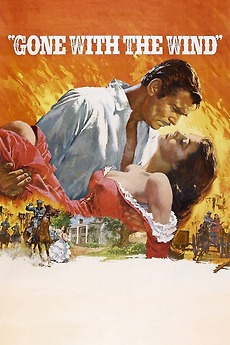
Gone with the Wind (1939) · Victor Fleming
A civilization gone with the wind
“Take a good look my dear. It’s an historic moment you can tell your grandchildren about - how you watched the Old South fall one night.”
While I respect the opinion held by Robin Moon, (who has the most liked GWTW review on Letterboxd) I would be lying if I said apart of me didn’t greatly resent her dismissal of Gone with the Wind as being nothing more than “pro-confederacy revisionist propaganda”. If she had an actual case to back this label up instead of just shouting that that’s what Gone with the Wind is, I would have loved to have read it even if I still disagreed. What I resent the most about this labelling is that it not only deters people from watching the film, but affects its legacy, especially when it is the first review for Gone with the Wind people will see when they look it up on this site. I can 100% get behind the usage of this label for a film like The Birth of a Nation, but not Gone with the Wind. I reject completely the notion that Gone with the Wind is “pro-confederacy revisionist propaganda”, because I have never gotten the impression that the film actually embraces the confederacy. Yes, the characters in the film embrace the confederacy, but that’s because we’re watching a story unfold about the lives of southerners during and after the civil war. Of course Scarlett and Rhett and Ashley and Melanie and virtually all of the other characters in the film are going to be for the confederacy, a common attitude at the time shared and embraced by the people of the south. If somebody made a melodrama about a German family living against the backdrop of Berlin in the 1940s, does that suddenly make the work, “pro-Nazi”, just because it happens to be set in this problematic place and time? To me, that’s what Gone with the Wind is. Hell, it’s literally what the title means - the capturing of “a civilization gone with the wind”, as the film’s opening crawl states. Margaret Mitchell, who wrote the Gone with the Wind novel, released three years before the film in 1936, said the idea for the story came from her years growing up where she would listen to stories of the south and the civil war recounted to her by her grandmother who lived during that era. Even reading the book, I never got the impression she was taking a side or trying to make a sympathetic statement about the lost cause. Maybe I am wrong in that respect, I can’t speak for Mitchell’s personal views, and I can admit to that wrong if I hear a good enough argument and see enough evidence, but to me, all Margaret Mitchell did was simply put the history she had heard to paper and simply illustrated with her prose the way of life, as well as the struggles of those living in the south during and after the war, and I don’t see anything racist or problematic about that at all. All it is is a rendering of history. Whether accurate or stereotyped, that admittedly can be up for debate, no one for sure can really say anymore because no one from this time remains alive, but there is no denying that this was a period in American history which happened and the attitudes of the characters were attitudes held by the people of the time. All dismissing a film like Gone with the Wind does is breed more division, and as I stated above, deters people away from digesting a story set during a very tumultuous but very important time in America’s history, a time and a story that should be remembered and known by people, especially when you pit it against the undeniable social progress and acceptance that has been made since, even if there still are some admitted flaws.
The only aspect of Robin Moon’s review I can agree with is that the film is too long, and that is the greatest reason as to why I don’t love this film as much as I wish I did. Four hours for a melodrama is pushing it, and the only reason Gone with the Wind is so long is because Margaret Mitchell’s novel spans over a thousand pages. In that respect, yes, the long length of the film is justified, but even the novel does not need to be as long as it is. But you know what, all-in-all, no matter what criticisms I have, or what scathing and abrasive opinions others may have, the majority of people love this film and nothing will truly take away Gone with the Wind’s iconic place in cinema’s history.
Reviewed on Letterboxd on 28 April 2025