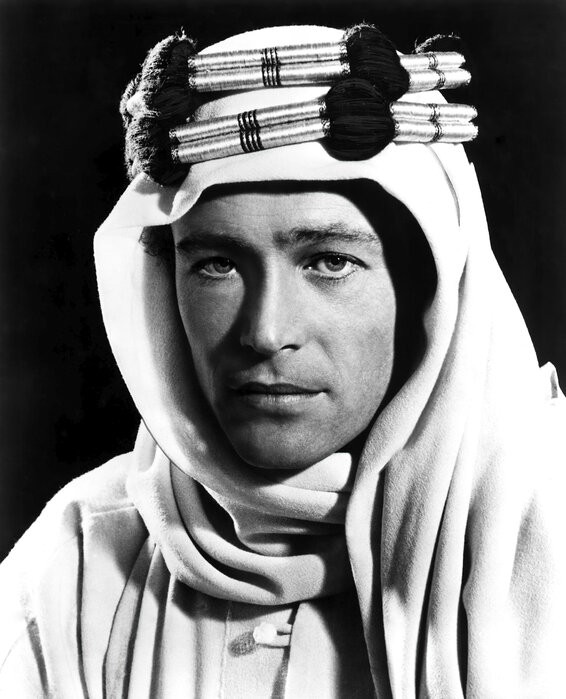
Lawrence of Arabia (1962) · David Lean
The greatest screen epic of them all
“I enjoyed it”
“Well, that’s probably the last time I’m going to see that”, said an elderly man sitting next to me as the credits rolled for a rare 70mm screening of Lawrence of Arabia, which is without a doubt the greatest single experience I’ve ever had in a movie theatre. No film I’ve ever seen in the cinemas has truly taken me back in time to the year of its first release like this one. This wasn’t just a simple viewing. This was an event.
I’ll never forget the night I first saw this film. It was jaw-dropping, breathtaking and life-changing and I’ll always remember the experience of seeing Peter O’ Toole’s grand and godlike performance as T.E. Lawrence, the sheer scope of the cinematography, hearing the epic score mixed with the desert landscapes, seeing the battle sequences and the “nothing is written” scene. My second viewing of this film however, as much as I still loved it, didn’t hit me the same way as that formative first viewing and I lost that spark with it. Until now of course. Seeing it again for my third and best viewing has only reaffirmed my love for this film.
Like Charles Foster Kane, we’re introduced to T.E. Lawrence on the exact same day; His untimely death in a motorcycle accident in 1935. At his memorial service, we meet a number of men who had the pleasure and displeasure to have met or briefly known Lawrence at some point in their lives. When we go back in time, we’re introduced to a man with a strong set of values and a sound moral compass, who tragically becomes nothing but a shadow and hypocrite of his former self, something he’s constantly called out for by his colleagues, both in the British and Arab armies, and is very well aware of his ethical stray. He’s disgusted with himself, his actions and the promises he can’t keep yet unlike a lot of people who fall prey to power, actually has the guts to admit to his superiors that he enjoys his prophet-like influence, to which he begs them not to give him a promotion for that very reason. And when an opportunity arises for death to claim him, he doesn’t stray away from the line of fire. Regardless of how much is historically accurate here, this is still one of the greatest and most fascinating character studies in cinema history.
The theme and concept of power corrupting a man’s heart is one that resonates with me so much, which is why this and Citizen Kane are so much more to me than what appears on the surface. There’s so much carefully composed substance, depth and allegory in every single shot, performance and word of dialogue in this film that you’re never truly done with it once the credits roll.
Lawrence of Arabia is hands down the greatest screen epic of them all and one of the greatest films of all time, period.
Reviewed on Letterboxd on 8 July 2023