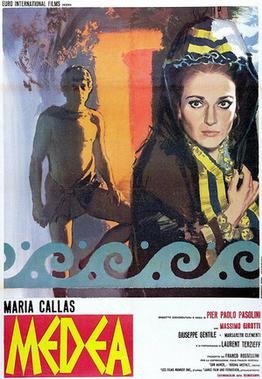
Medea (1969) · Pier Paolo Pasolini
What if the Gods were declared dead?
Pasolini’s adaptation of Medea is probably one of the most inaccessible and incomprehensible films in cinema history if you have no prior knowledge of the Greek mythology stories of Jason’s quest for the golden fleece and Euripides’ interpretation of Medea’s tragedy.
Pasolini thrusts the viewer in to the film without any character introductions, without any introductions for the uninitiated in regards to lore and mythology or without any set laying about where we are or why we’re here, which is what makes this film a challenge to grasp if not familiar with the stories.
So in other words, yes. You were correct.
This is the Five Nights at Freddy’s Movie of its day.
Dialogue and exposition is very rarely used in the film and when it is, it’s usually to express the personal beliefs of Pasolini himself, such as atheism and Marxism, two ideas that I myself aren’t even close to aligning with, but there’s no denying at all how intelligently he manages to translate it in the context of this setting. This dude was an absolute genius.
Pasolini’s spin on the Medea myth and Greek mythology as a whole is incredibly unique and it actually gave birth to a concept for me that I’d never even thought of before. What if one of the ancient Greek societies declared the Gods as dead? And what you get out of that is a much more realistic take on this myth to the point that this could have been historically true. There’s no death-defying quest for Jason and the Argonauts, nor the famous battle with the hydra, everything here is relative and true to life.
Reviewed on Letterboxd on 13 January 2024