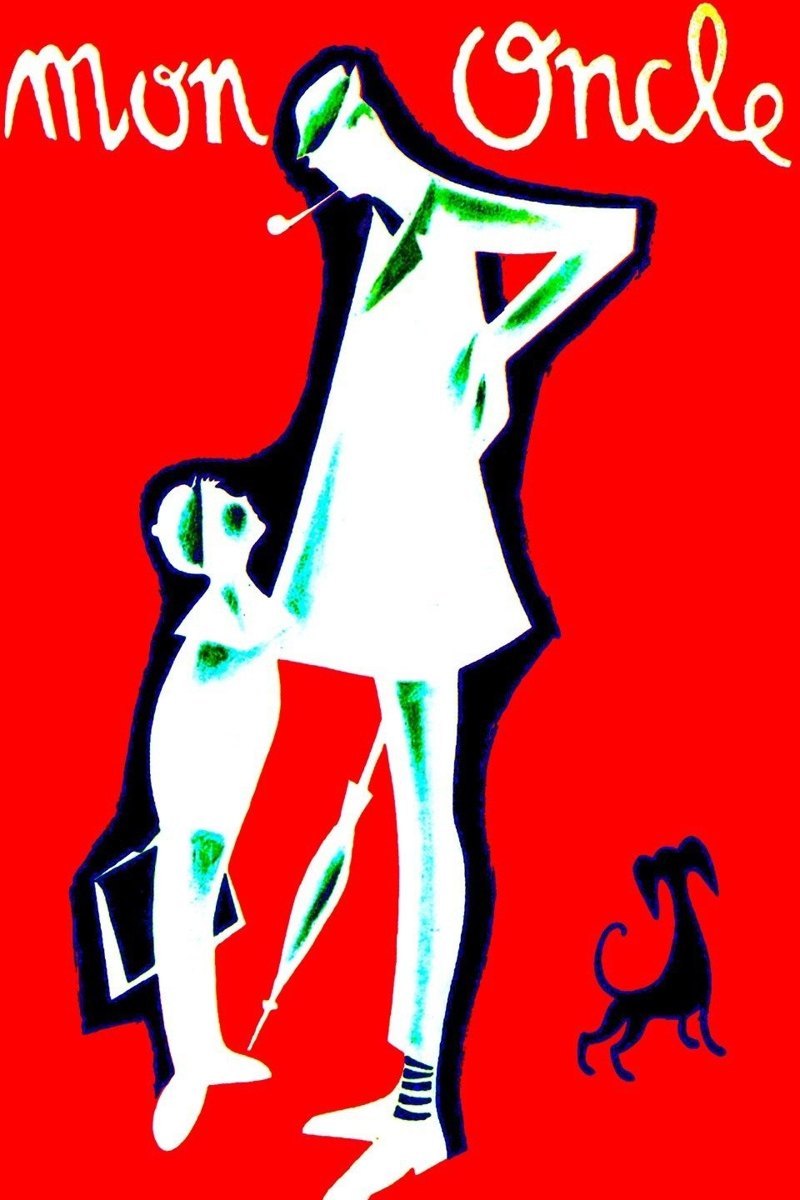
Mon Oncle (1958) · Jacques Tati
Out with the old and in with the new
It truly leaves me in awe how Mon Oncle, one of the sweetest films ever made, can also be looked at as a cautionary tale of the rise of technological and architectural advancement that can leave one feeling slightly pessimistic for the future by the time the credits roll. There really seemed to be a setting trend in European cinema going into the 1960s of filmmakers like Fellini, Antonioni, Godard, and of course, Jacques Tati, tackling the topic of modernism and the dire effects it would have on the next generations to come. The films that instantly spring to mind for me are La Dolce Vita, La Notte, Pierrot Le Fou and Blow-Up, but Mon Oncle definitely ranks among the earliest works to really dive and examine this assessment.
A shot that Jacques Tati continues to cut back to the most every once in a while is the shot of the remnants of an old demolished bricked building, and behind this leftover, forgotten mess are dozens of towering, newly-built clone apartment buildings that lack any emotion, beauty and personality which that demolished building for sure, in its heyday and reign, once had, and I believe everything Mon Oncle has to say on this subject HAS truly aged like fine wine; the over-reliance on technology for the most leisurely of conveniences with just the click or buzz of a button and the self-proclaimed vanity that comes along with it, as shown with Madame Arpel’s continual flaunting of her fish fountain to the guests of their home. Out with the old and in with the new is the true theme of this film.
A lot of the wacky and bonkers set pieces and inventions in this film like the silly chairs and the bouncy jug must have been considered a gross exaggeration when this film came out and in a world now where he have silly inventions of this kind, you really can’t even call a film like this a satire anymore because the world truly has become what it sought out to predict. The way that Jacques Tati was able to tackle and convey all of these ideas with just the use of action and the art of showing and not telling is a sincere marvel, as well as still retaining its heartwarming joy that follows you for the entirety of the film.
I love Jacques Tati’s use of color, his vision was truly meant for it and I think I would love Monsieur Hulot’s Holiday just a little bit more if it had the striking, colorful vibrancy as Mon Oncle.
I’m never quite laughing out loud with Jacques Tati by any means, but his films leave me warmed and charmed and smiling all the way through so much and I think that is a far great and more powerful emotion than laughing to really execute right and elicit in a viewer.
Reviewed on Letterboxd on 24 August 2024