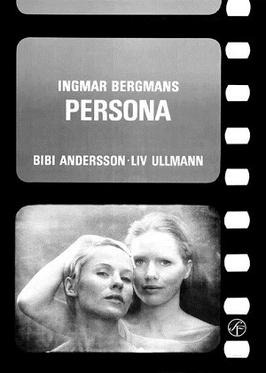
Persona (1966) · Ingmar Bergman
Deep down, hypocrites we all are
Is it possible to be one and the same person at the very same time – I mean, two people?
Persona; one of the true, great notorious films to even ATTEMPT to write about; to even ATTEMPT to dissect and get to the absolute bottom of; cinema’s greatest puzzle-box; the film that always moves even when to the end of it you have reached; a Dostoevsky-length novel which would take you weeks to get through condensed into a measly hour and twenty-three minutes. Where does one even well and truly begin when getting to the absolute crux of what it is Persona is even all about? The title is certainly a giveaway, a clearer giveaway than most may think. Of the many times I have had the pleasure to go through all the psychological depth this film has to offer, my opinion of what exactly it is Persona is meant to be or represent changes each time, and a true love-hate relationship have I come to form with this film for that very reason. Since high school I have not seen Persona. In just my final year of high-school alone, I watched this film seven times. On a few occasions, twice over the course of a day. This film, I was OBSESSED with during this period. Yet, as time has passed, my opinions on Persona have, until tonight, admittedly dwindled, and not necessarily because the ideas expressed in it become outdated for me, but because I eventually one day came to this conclusion that although two master performances from Liv Ullmann and Bibi Andersson Persona houses, as well as a muggy and haunting atmosphere with particular black-and-white photography that very much reflects these moody feelings, I began to ask myself if there were really any ideas in this film which I truly found personal identification and resonance with on the same level as my all-time favorites like Blue Velvet, or Taxi Driver, or The Searchers. The past few years of contemplating this is finally what lead me here tonight; my first rewatch of Persona as an almost twenty-one year old man versus the naïve sixteen-year-old boy who saw this film on a whim for the first time one cold, unforgettable winter’s night at three in the morning when sleep I could not get. Five years almost has it been since this film first came into my life. And much, so so so so much has changed in me, psychologically, since that first viewing.
What we can pick apart about Persona based on the title alone is the theme of identity being without a doubt the most important idea Bergman is trying to get to the central understanding of. Deeper, however, do I believe Bergman went with this idea. I came out of this latest viewing of Persona with quite a strange emotion; that of inspiration - not artistically, but psychologically. Persona, above all, is about individuality - THE individual - as well as the importance of maintaining an identity that is original, one-of-a-kind and unique to YOU, influenced by nothing and nobody else but YOU alone, and YOU yourself, the complete antithesis of what Alma throughout the film aspires to, and what she, by the film’s end, comes to learn. But what if, even yourself, you don’t truly know, and can’t truly know? What hypocrisies in ourselves can we not see in ourselves that others can? What hypocrisies in ourselves can we see that others can not? Why, behind a mask, do we choose to hide these hypocrisies? Such behavior, are we even conscious of? Can it be plucked like a single, lone hair on our chest? Can one ever truly know who it is they are even when twenty-four hours a day, seven days a week and three-hundred and sixty-five days we spend with ourselves? Can one ever truly know someone who their entire life and trust and love in them they put? Repeated, complicated, unanswered questions of this sort will Persona make you ask.
The deeper one goes into the condition of their very existence, more accepting do they become to the fact that perfect we cannot be, no matter how far and deep to yank out the roots of our flaws we may go. Split personalities do we all have. The difficult to admit truth is that who we are behind closed doors is not the person we are outside of them, no matter how much we so try to tell ourselves and others that this version of ourselves we have created we truly are. Certain levels to this artificiality there are; those who put on a face to simply get by in social events and settings; and those who put on a face for the vanity, and the glamour and the glittering gold that may come along with opportunity. This level of artificiality in particular can be the most damaging, especially when the future, impending prospect of responsibility and accountability for one’s actions and past begin to supersede the satisfaction and convenient place in society that one may have once possessed; the very convenient place in society and satisfaction that Elisabet Vogler possessed until responsibility tied her down. But as she so tells her husband, like an anxious child versus a responsible adult with adult responsibilities would she rather be than the mother she has so regrettably become. And what finer way to shift our responsibilities and duties for our own selfish needs and desires than with the power of silence; the very power of silence Elisabet uses in her refusal for the entirety of the film to utter a single word, the very case that so resulted in her being treated at the psych ward in the first place. A powerful option the conscious decision of silence is. Perhaps more so than speech. For one to drop completely the only conventional component of basic communication, eating away, deep, deep inside, something very well must be - only the bitterest of resentment, prejudice and annoyance - the very reasons humans do consciously choose to ignore another.
Its this façade; this image that Alma built in her false identification of the put-on personality of Elisabet that so created deep within her the idolization she so begins to feel for her, as well as the desire to become her, when really, herself to become the person she should become she should, above all, be turning to the most. This we see in the way Alma so similarly begins to dress like Elisabet; in her taking up smoking; in her dream-like desire of having her head softly held down to Elisabet’s breast, in what is one of the film’s most famous and haunting images. Alma, who followed in the footsteps of her mother to become a nurse; Alma, moved by the nurses who so devoted their entire life to their profession. Alma, who takes life as it comes to her and not one who, like Elisabet, chased, and took the risk, and devoted her life to gain the successful career of wanting to become an actress. This façade Alma falls for, and humiliated is she when to terms she comes with the fact that like a fool she had been played for; that the complete opposite of all Elisabet, with her smile, and her serene solitude, had convinced her to be, she was not.
If there’s an idea from Persona I’m going to take away the most, it’s the importance of individuality. The importance of turning to yourself, and not to others, to shape the person that you become in order to find yourself in an existence where we’re already lost enough. A name, a race, and a gender are we born with, and yet our true selves, our true souls, because of such outside interference and influence, in our everyday, in our culture, the movies we watch, the music we listen to, do we never truly get to find, work out and develop due to our chasing to be like the faster runner on the track, or the singer with the better vocals. But like the very hypocrisies the film tries to highlight, a hypocrite, even with my declaring of these ideas, I very well am, for a film like Persona, and an artist like Bergman impacts, influences and inspires me, inspiring me to write the very review, analysis, report, whatever you want to call whatever it is I have written, which you are now reading. As Alma so declares, “art is enormously important in life, especially for those struggling for one reason or another.”. Deep down, hypocrites we all are.
The sheer, important, profound impact Persona has left on my life is undeniable. So much more complex depth do I find with each viewing; its a different film each time and you really could dedicate your entire life to watching this film and still struggle to really get to the base of each and every element Bergman threw our way. The power of this film and all it has to say and show on what it means to be a human being in a world and existence where our true higher identity we don’t know, and may never truly know, will continue to resonate, as well as haunt me, to my dying day, and forever will Persona be one of the all-time most important works of art that so grateful am I to have in my life.
Reviewed on Letterboxd on 22 October 2024