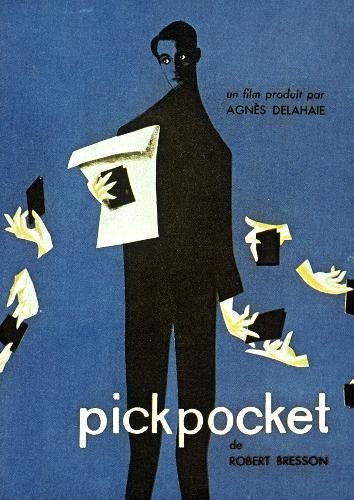
Pickpocket (1959) · Robert Bresson
Crime and Punishment in 75 minutes
“Not all theft is so serious. Some can be excused if poverty is behind it.”.
In just 75 minutes was Robert Bresson able to compress and perfectly execute the essence of Crime and Punishment’s 650-something pages. Just that reason alone makes Pickpocket one of the most impressive films ever made, and what makes it so impressive is that the majority of these ideas are communicated visually, in the most sparse and minimal way possible, rather than just relying on dialogue to get these ideas across. To do Dostoyevsky justice on the screen in this way is an achievement. Pickpocket is not a direct adaptation of Crime and Punishment, but it may as well be. The deep moral compass remains, though the setting and crime are reimagined. Instead of 19th century Russia, we’re in late 50s France. Instead of murder, we’re dealing with theft. Just like the novel, Pickpocket dives deep into the psychological territory of why people commit crime. There’s a strong emphasis on environment, and how growing up and living in such poor conditions essentially creates the future criminal. Really, at the end of the day though, what drives the criminal is survival. Michel in the film even admits that he doesn’t delight in stealing from others, but the reason he does it anyway is simply to get by, and what drives him to continue stealing is the belief of his theory that certain people are allowed to commit crime if the person is in a situation where they can’t help themselves legally, and if there is in the end a just and noble outcome to the committing of said crime. I declare that Pickpocket is the best film ever made that perfectly executed Dostoyevsky’s philosophies on screen.
Reviewed on Letterboxd on 24 July 2025