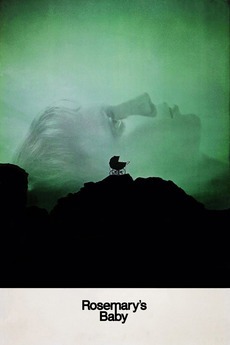
Rosemary's Baby (1968) · Roman Polanski
The horrors of a world that declared God dead
Friedrich Nietzsche’s declaration that “God is dead” goes back further than the 19th century. The Scientific Revolution, the Age of Enlightenment, the French Revolution, and soon after his death, the Russian Revolution, proved Nietzsche’s suppositions that humanity, for the first time ever, was finally ready to abandon God and move towards a future where rampant, immoral nihilism reigned supreme.
In Dostoevsky’s The Brothers Karamazov, the skeptical intellectual middle brother, Ivan, proposes that the church as an institution is immoral because they champion a God who blindly allows the innocent on Earth to suffer, and while he remains passionate and convinced in his belief, he also believes that without the omnipotent authority of God in our lives, all Hell would break loose in society, because society would then pose to themselves the terrifying question of “who or what is stopping me from doing whatever the hell I want?”
As the human race moved into the twentieth century, a period marked by world wars, soldiers coming home forever damaged, stock market crashes, and ideological genocides, more and more and more people on an unprecedented widescale level resigned from their belief that an all-seeing, ever-loving God watches over them and has their best interests in mind. Who then but the devil, who gave Faust his youth and Robert Johnson his guitar skills, is there to turn to next?
Rosemary’s Baby is a film that reflects the enduring horrors of a world that has not only abandoned God, but declared Him as dead. A world where the value of human life is sacrificed for success, standing, youth, and ultimate, Satanic power. Where those who try to help and do good end up paying the price for it with their lives. A devastatingly nihilistic worldview where evil has won, where evil will continue to win, and where that evil should be embraced rather than fought, a recurring worldview in Polanski’s films that serves as a reflection of the man himself and what he would go on to do.
One of the most effective horror films ever made. The film’s realism, which I liken to The Exorcist, is what makes its psychological horror so utterly believable and terrifying. You are put into Rosemary’s shoes. All alone, without a friend, and not a single person to trust, even those closest to you. You are trapped in this spider’s web of underlying tension that you genuinely feel from the first scene to the very end.
Reviewed on Letterboxd on 18 July 2026