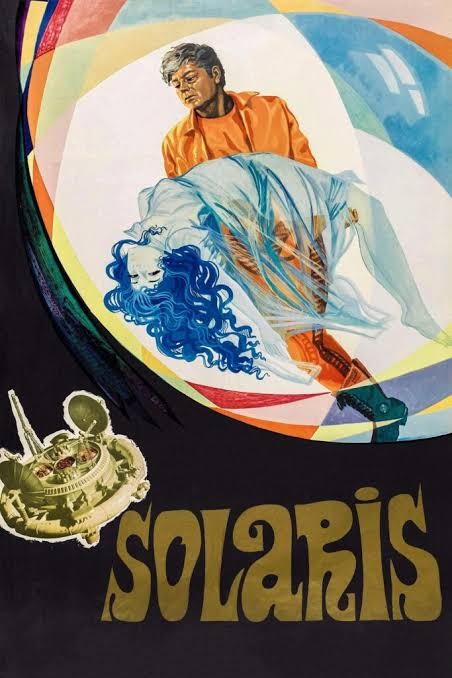
Solaris (1972) · Andrei Tarkovsky
What if nature decided to fight back?
“Shame, the feeling that will save mankind.”
The visual emphasis on nature is one of the all-time great Tarkovsky staples; not only is it a visual staple, but a thematic staple that seems very much to recur in almost all of his works. Solaris is a true case of lightning caught in a bottle; a staple of science-fiction literature that just so happened to align with the philosophical and existentialist ideas at the time of one of the greatest emerging talents of filmmaking. A novel that expressed the profound ideas behind the sentience of nature and just how far it extends and a filmmaker who took this deep empathetic understanding to a whole other level that, in my eyes, greatly surpasses all that Stanislaw Lem in 1961 wrote. Even if Solaris does remain the most, “commercial”, of all of Tarkovsky’s films, it doesn’t extend to the sometimes-farcical comic-book regions and aesthetic of the science-fiction genre, a region that Tarkovsky himself reportedly had a great distaste for. It maintains a strict level of realism that runs for the entirety of its length where the science-fiction aspects are secondary, and the philosophies and ideas expressed are primary, the very thematic organisation too of Stalker’s structure. Solaris is the precursor to Stalker. Both films pack a strong punch on their emphasis on why it is that we should treat nature with the same care, reverence and respect as we would, and should show to another human being, as well as the human reality behind what would happen if nature decided to fight back against our interference in its state of existence. For all we know, the simple act of snapping a branch from a sentient tree could be their painful equivalent of chopping off one’s arm with an axe. The context of the desecration of Solaris’s environment would be the scientists pollution of the waters of the planets sentient ocean with high-energy X-rays. Instead of, like a tree, standing stock-still, unable to fight back, back is Solaris able to fight, and a taste of their own medicine do the scientists aboard the space station in the planet’s orbit get. How can human beings be kind to one another if we can’t even be kind to nature, nature who not only doesn’t hit back, but can’t hit back? To me, that’s the question regarding moral good that Tarkovsky asks of us most in Solaris to consider and take away.
Reviewed on Letterboxd on 28 October 2024