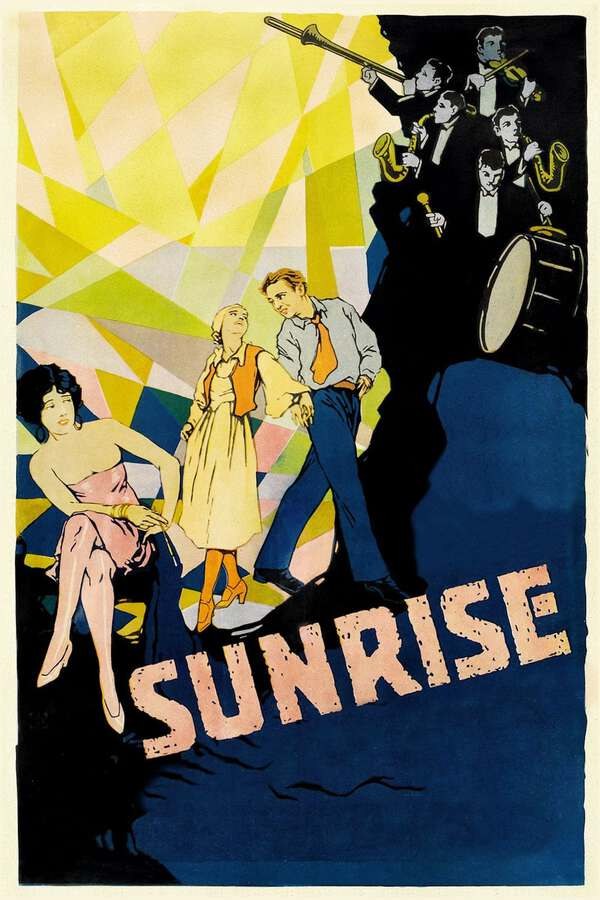
Sunrise: A Song of Two Humans (1927) · F.W. Murnau
The masterpiece of F.W. Murnau's career
Since it’s release all the way back in 1927, Sunrise: A Song of Two Humans has widely been regarded as one of the finest films to have come out of the silent era and for some, one of the finest films ever made, period. I first saw this a few years back when I was first making my way through the 2012 Sight And Sound list (where it was placed 5th, now 11th on the 2022 list) and although I enjoyed it enough on that first viewing, it’s one that I have been a little dismissive of and I think that had to do with the simplicity of the film’s story and my personal connection to it compared to more grander silent films like Greed or The Passion of Joan of Arc (my two favorite silent films) but this second viewing completely shatters everything I previously thought beforehand.
Sunrise is a fairly simple, easy to digest film from the silent era yet it’s one of the most fascinating, beautiful, magical and moving works in the history of cinema and that I have ever seen personally.
With the dark set-up of an unfaithful farmer tempted to drown his wife by a sexy flapper from the city (depicted as a demoness dressed in pure black), Sunrise ends up becoming one of the most heartwarming love stories in cinematic history, of a marriage renewed, rekindled and more passionate than it was before. This film genuinely made me tear up on five separate occasions, and none of those particular scenes were sad or heartbreaking, but they were just so endlessly beautiful that I couldn’t control myself. Some of the most moving imagery I’ve ever seen and you can feel the love between these two characters radiating through the screen. And this is before the French poetic realism movement of the 1930s too where you had filmmakers like Jean Vigo with L’Atalante and Jean Renoir with Toni or A Day In The Country making films set in more urban or contemporary settings trying to find the beauty of these mundane, everyday environments, and that’s exactly what F.W. Murnau is doing here, which I just find so fascinating.
Although still a silent film at heart, this is one of the earlier sound pictures ever made, which makes use of sound effects like car horns, murmuring, cheering and some animal noises. Usually silent films from this era featured a live score in the theatre whereas Sunrise actually had a full synchronized score already embedded in to the film, and it’s one of the most beautiful scores I’ve ever heard and only enhances the beauty and emotion of many of the film’s scenes. The cinematography is absolutely beautiful too, easily one of the best-looking from the silent era.
There’s a real German Expressionist feel to the more surreal, distorted and dark moments of the film, which makes sense for Murnau was one of the main filmmakers from that movement, having directed Nosferatu and The Last Laugh, and it’s really interesting to see that style come through on an American production like this, especially before the dawn of film noir. There’s also early hints of romantic/screwball comedy during the scenes in the city, where the farmer and his wife smash the statue in the photographer’s office and the pig escaping from his cage at the carnival.
Sunrise is hands down the masterpiece of F.W. Murnau’s career and easily one of the greatest films in the history of cinema and now, one of my new all-time favorites.
Reviewed on Letterboxd on 5 June 2023