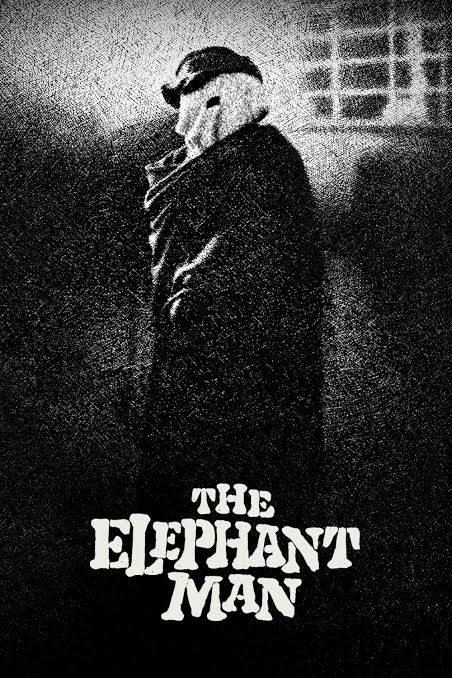
The Elephant Man (1980) · David Lynch
The heart of Oliver Twist in the body of Frankenstein's Monster
“Mr Treves, don’t worry about me, my friend. I am happy every hour of the day. My life is full because I know that I am loved. I have gained myself. I could not say that were it not for you.”.
A lifetime spent without a single ounce of kindness; is it any wonder then why John Merrick shunned the first ounce of it he had ever received in his life when Frederick Treves first took him into his care? This man who did not know what kindness was, what kindness could be, and what it could look like. Kindness that for the first time in his life extended to actually being treated like a human being. A human being like any other who feels the joys and pains of love, and life, and happiness and harm, these joys and pains that bring even us up and down.
As opposed to Frankenstein’s Monster in the original book by Mary Shelley who goes on to carve out an anarchic philosophy for the destruction of mankind at the doing of his own hands, even after a lifetime of only being treated as second-rate, as inferior, as an animal and not a human being, was Joseph Merrick able to maintain his happiness and his morality and his love for people and their beauty in a world where he couldn’t even show his face in public without people running away in fear or being made a spectacle of for financial gain or renown. The childlike heart of gold of Oliver Twist in the body of Frankenstein’s Monster. You couldn’t blame anybody subjected to such treatment if bitter and resentful for the rest of their lives they became, the exact same bitterness and resentment for mankind that Frankenstein’s Monster develops over the course of the novel, which is what makes The Elephant Man and the story of Joseph Merrick all the more moving because he is able to remain the complete antithesis of everything Frankenstein’s Monster came to stand for.
There’s a famous quote from Dostoevsky’s The Brothers Karamazov which sticks with me that goes, “I love mankind, but I find to my amazement that the more I love mankind as a whole, the less I love man in particular.“. I think this optimistically-pessimistic quote you can apply in the context of The Elephant Man. Hope are we given when we see the souls of the people in this film who show John Merrick acts of genuine kindness and decency which makes us believe in the good of what mankind as a whole has to offer. And then all that hope and that belief of the good of what mankind has to offer do we lose entire every time we see John subjected to all the abuse and torment he goes through, torment and abuse he faces all because of his deformity and for nothing else. This film is able to make one still believe in the light when it appears in a world that is also very dark, and this idea is very much one of the great recurring themes in all of David Lynch’s work, whether it be Blue Velvet, Twin Peaks, Wild at Heart, yet it is with The Elephant Man where this idea is at its most emotionally resonant and visually sincere. Every sweet word which escapes from this man’s mouth breaks me.
Reviewed on Letterboxd on 23 January 2025