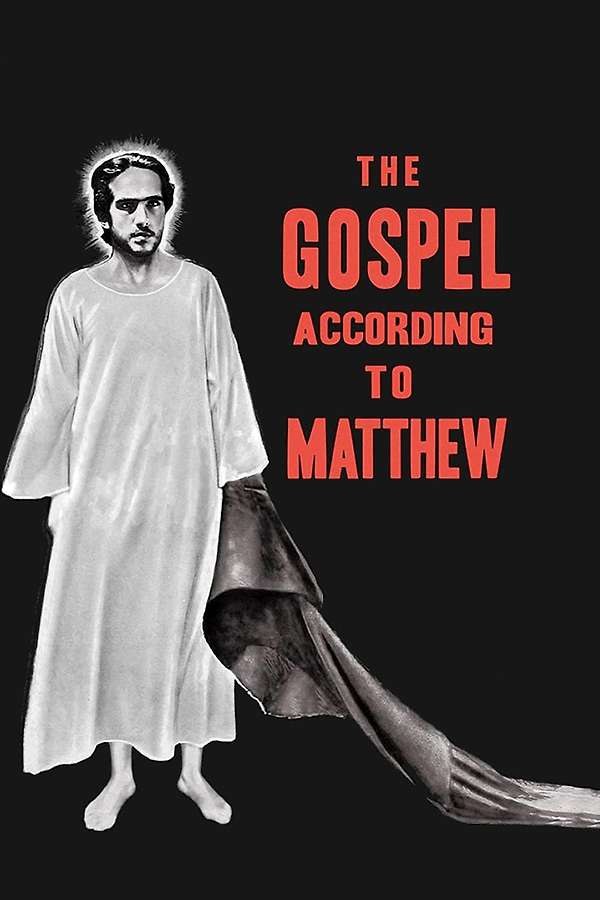
The Gospel According to Matthew (1964) · Pier Paolo Pasolini
Better felt on the page than on the screen
“For me, the Gospel is a great intellectual work…a great edifice of thought. It doesn’t console. It fills, integrates, regenerates, sets one’s own thoughts in motion.” - Pasolini
Its evident from this quote alone, despite having been a gay Marxist-atheist in his lifetime, that a great and deep respect not only for the Gospels, but Jesus Christ and his teachings, did Pasolini no doubt have. He very much goes onto prove that even if an opposing belief and way of life one has and leads that go against and reject the notion of a God, or the validity of all the bible says, that still possible it is for one to recognize the morality and the good of what Christ symbolically stood for and what he sought to spread with his teachings - teachings that anyone of any political, social, religious or sexual orientation can still apply to the morality of their own differing mindset. You wouldn’t think someone of Pasolini’s belief structure to be the one filmmaker of all people to adapt this story, which so easily if he really wanted to could have dismissed or even used as an analogy to attack and critique Christianity, but instead such respect, care, and faithful air did he show for this story because of the intellectual and moral merit that he saw in the teachings. To see that makes me admire the man all the more than I already do. That being said, I unfortunately did not enjoy his adaptation of The Gospel According to Matthew. I’ve long put off watching this film just because the main actor playing Christ has never looked convincing to me, and that was very much proved tonight. I could not for the life of me see the embodiment of Christ from this actor, and it makes me appreciate what Jim Caviezel had to offer in his interpretation of Jesus in The Passion of the Christ all the more. But even Passion of the Christ I’m not too big on either, which I think comes down to my own belief that profound justice the Gospels cannot be done on the screen, and only on the page can the true power of the words and teachings be felt. This just didn’t really offer me anything new or anything more insightful than what I’ve already read before on those pages. Everyone has their own mental image of what the aesthetic and scenery of the stories in the bible feel like and mean to them, and I didn’t feel like that aesthetic was met for me here. Totally not at the fault of Pasolini, this is a personal conviction of my own. Great respect do I have for this film, and madder respect for Pasolini’s decision to adapt it, but the admitted dejection I felt watching the Gospel does not compare to the enrichment I felt reading the Gospel.
Reviewed on Letterboxd on 20 November 2024