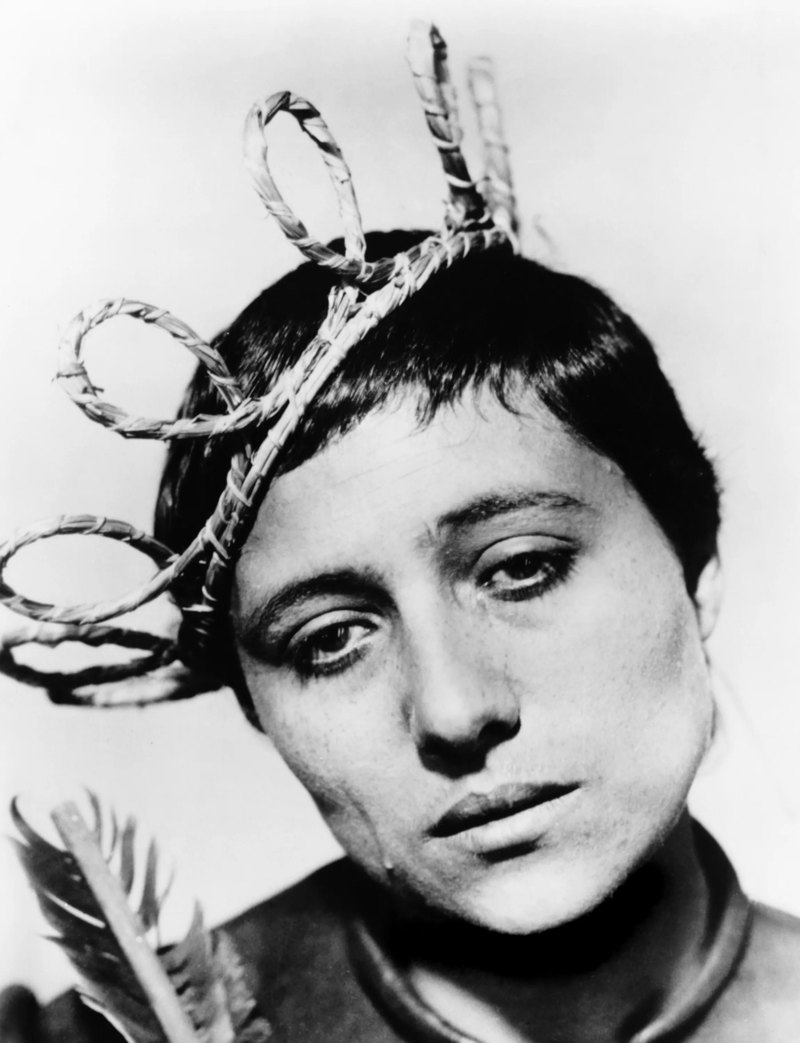
The Passion of Joan of Arc (1928) · Carl Theodor Dreyer
Lightning caught in a bottle
“Even if you tear my soul from my body, I will renounce nothing.”.
Atheist, agnostic, believer - no matter what one you fall under, accessible the true themes of The Passion of Joan of Arc are to each and every one of us - hypocrisy and intolerance. “The church is merciful”, so says the main Robert De Niro-lookalike bishop in Carl Theodor Dreyer’s masterpiece, and yet, to the stake to burn, a nineteen year old did they, the church, the supposed representatives and devout carriers of God and his son’s word on Earth, send - for blasphemous, untrue, and a trick from the devil himself did they deem the divine faith of Joan’s word to be. That acting on God’s word and guidance that she and she alone herself received from Him was but a mere delusion of the mind. And yet, a martyr, a saint, an icon, and an inspiration would she soon become. In vain, her death was not, for immortalized the name, Joan of Arc is, and forever will be. A symbol and beacon of hope against the standing up of one’s self and one’s beliefs, and the trials and tribulations of the persecution, injustice, intolerance and hypocrisy that come along with it. This soul who died for her belief, her firm, firm, belief, that her duty, her reason for birth itself, was to carry out the work of God that He alone set out for her to achieve.
Whether one agrees or disagrees of the true validity of Joan’s beliefs should not, for the reasons above I have listed, matter and not affect one’s viewing of The Passion of Joan of Arc - a film that has, since its release all the way back in 1928, rightfully crowned itself in cinema history, since day one, as one of the all-time beloved, important, impactful films ever made and its power has not diminished with time. One of the reasons in my eyes why Dreyer is one of the great filmmakers ever is because he is probably the only name in film who truly tapped to a level where, the holy spirit itself, did he manage to capture on film. All one has to do is go through the motions of the final ten minutes of his 1955 film, Ordet, and further will you understand what I mean, for enough those final ten minutes are to make the most devout nonbeliever, even for just a few teeny-tiny seconds, believe that something greater, beyond what’s before our eyes and minds at this minute, there is. Its with The Passion of Joan of Arc where THAT very spirit on camera he first captured, and that power sticks with you for your entire viewing. The visual language of all that Maria Falconetti’s face reads in reaction to the questions being asked by her executioners and in the firm, resolute belief in her words is some of the most true endearing, noble, heartfelt, dedicated acting ever depicted on film, and forever will those unforgiving close-ups stick with you.
This film truly was lightning caught in a bottle. No other time period could a visual rendering of the history, reenactment and playing-out of Joan’s trial and execution have been recorded and then go on to have such a genuine, profound strong effect than in the silent era when it was made. The silence is what makes it all the more authentic. That what you’re watching isn’t just a reenactment, but the very footage itself of ALL the wrong that took place that fateful day, on the 30th of May, 1431.
Reviewed on Letterboxd on 29 July 2024