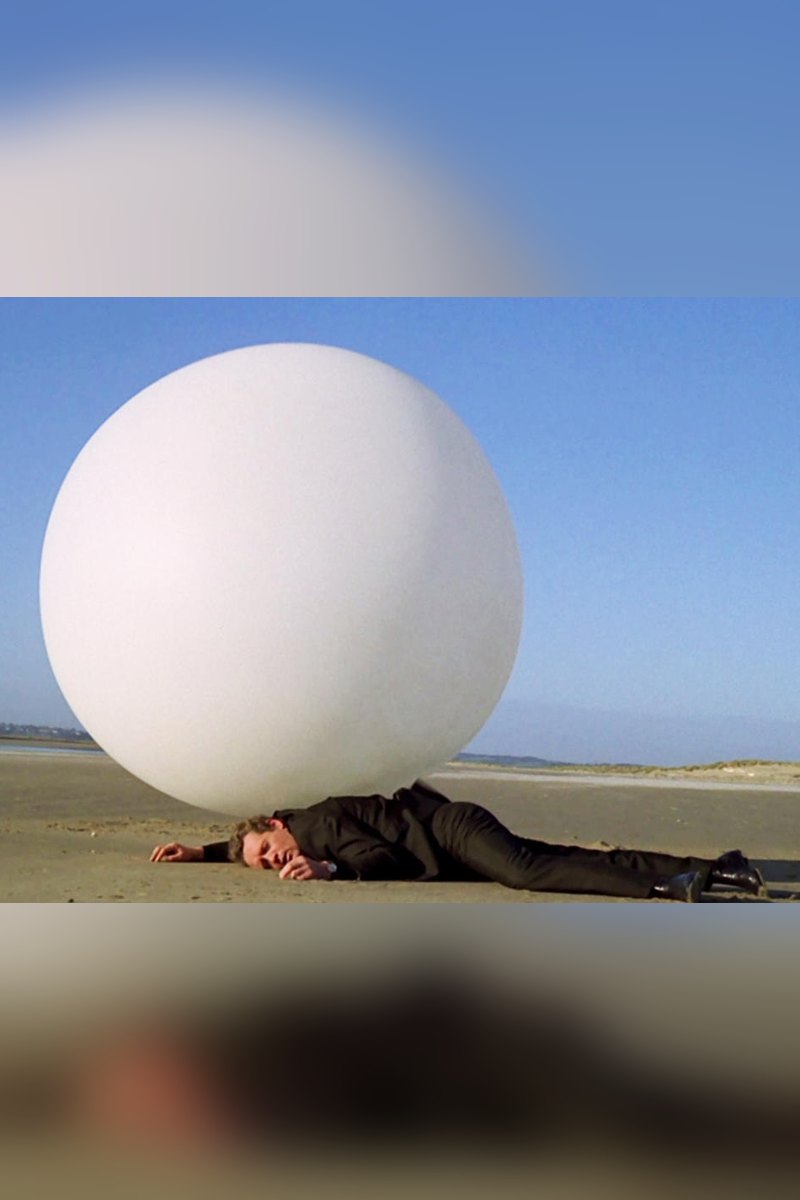
The Prisoner (1967) · Patrick McGoohan
The Twin Peaks of its day
“I am not a number. I am a FREE man!”
Before the questions of “who Killed Laura Palmer?” and “Who Shot JR?” left television audiences scrambling like chickens for answers, there was the question of, “Why Did Number Six Resign?”
The Prisoner is one of the most challenging, unique, bizarre, off the rails, yet truly singular tv shows I’ve ever seen. Taking it’s influence from Kafka, with its plot even mirroring that of The Trial, The Prisoner follows the resistance and escape attempts of Number Six, a British secret agent who is kidnapped by an unknown bureaucracy and taken to a small, Italianate surveillance community known as “The Village” where the authority known as Number Two is tasked with extracting from Number Six the reason as to why he resigned from his agency.
I’m not quite sure what to make of The Prisoner yet, hence my omission of a conclusive star-rating. There are many brilliant aspects to it, Patrick McGoohan, first of all, as the forever charming and suave Number Six and it’s absurdity, it’s playfulness, humour, wit, fast-paced French New-Wave inspired aesthetic another, but there are also a lot of creative choices the series makes that caught me completely off guard, and because of that, I could feel my attention span really start to wane halfway through.
The first few episodes, while retaining a strong air of absurdity, lean more into spy-thriller focused plots, while the rest of the 17 episodes are more allegorical and lean into a kind of storytelling that’s more politically, intellectually and institutionally charged. This identity change is very abrupt and I found myself not enjoying these episodes as much compared to the spy-centric ones. Episodes 1, 2 and 7 in particular I single out as being the best.
The continuity of this show is very strange, but it’s an aspect that is completely in tune with the show’s singular stamp. It’s almost as if every episode is it’s own TV show. Sometimes an episode will end on what feels like a cliffhanger and then you put on the next episode and it turns out to be a fresh new story where the previous events are never acknowledged again. On the surface, this is extremely frustrating because the show’s premise promised one thing and instead it gives you something else entirely. But that is actually where The Prisoner’s strengths and charms lie, because the show itself was a critique of obligation, conformity and totalitarianism. By giving the audience what it wanted versus what it wanted to be would have killed any semblance of individuality the show has, and without it, the show probably wouldn’t have developed its cult following. The show’s boldness can’t be denied and I admire it deeply for that. There’s literally an episode where the show’s premise is converted into a western-cowboy setting. Why do this? “Because why not? Who else has the balls to do this?”
The Prisoner challenged its audience, it got under their skin, it made them think, it asked compelling questions and didn’t bother to resolve them. The only other show I can think of from that period that was doing something similar was the original run of The Twilight Zone, but even that conformed to tying up its loose ends by the end of its half hour. The Prisoner subverted mainstream audience expectations in exchange for free-will. Free-will that lasted for seventeen episodes and was cancelled soon after. Sounds like another TV show that would go on to air twenty-three years later that begins with “Twin” and ends in “Peaks.”
The Prisoner was the Twin Peaks of its day. Bold, inventive, singular, bizarre, but forever memorable. I didn’t love it, but I admire it for being what it is. Criterion box-set when?
Reviewed on Letterboxd on 5 July 2026