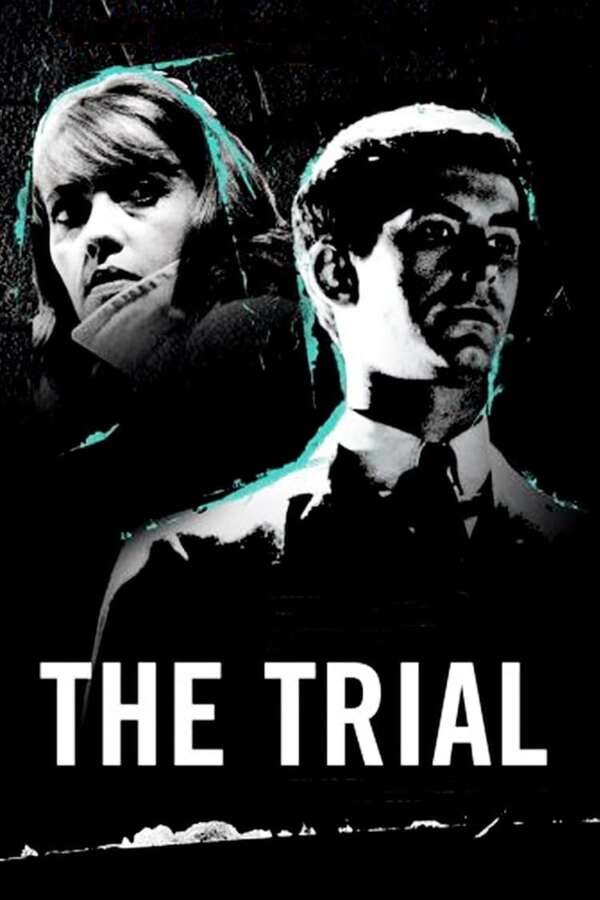
The Trial (1962) · Orson Welles
An indictment of man and the bureaucracy he created
“Do not attempt to enter without my permission”, says the guard. “I am very powerful, yet I am the least of all the guards. From hall to hall, door after door, each guard is more powerful than the last.”
The Trial is an indictment itself, not of the law, not of the justice system, but an indictment on man and the bureaucracy man has created. A bureaucracy that has abused the legal system and turned it into nothing more than an interconnected mafia fueled only by power and influence. An interconnected mafia ruled by an all-seeing, all-knowing malevolent Lord, and yet, who that Lord is, no one knows. Does such a Lord even exist? Through your viewing of The Trial, you can’t shake the unnerving feeling off that He does exist and that He has His eye, Sauron-like, right on you. And even if you haven’t done anything wrong, it’s almost impossible to shake off the impression that you’re an innocent man, as long as that eye is locked on you. It doesn’t seem real when you think of it like this, hence its nightmarish, absurdist depiction.
“He had been taught the the law should be accessible to every man”, and yet, a single man pleading innocence cannot stand up to the law himself without the law itself coming to his aid. Though it is not the law that failed Josef K, but man. Man who created a system designed only to kill the light of the spirit to subject it to the mundanity of a life free of singularity, in order to turn you into a living, breathing machine tak-tak-takking away on a typewriter, every day, forever, until the day you die.
Franz Kafka, a banker subjected to this very same mundanity, saw through the veil of superficiality, and from that, crafted one of the most subversive, odd, singular stories that exposed the hypocrisy of such a system that still, like a mafia, rules today.
Reviewed on Letterboxd on 14 March 2025